Vitamin A for Skin Benefits: Renewed Glow
- 1.
Does vitamin A improve skin? Well—does tea cure a hangover? (Spoiler: nearly)
- 2.
Vitamin A vs retinol: Are they twins, or just distant cousins at a family BBQ?
- 3.
Is vitamin A good for glowing skin? Or is that just marketing fluff?
- 4.
Vitamin A or C for skin? Let’s settle this like civilised folk over a pint
- 5.
What forms of vitamin A actually work? (And which ones are just fancy packaging)
- 6.
How to start vitamin A without turning into a flaky mess (a proper guide)
- 7.
Potential side effects of vitamin A—and how to dodge ’em like a pro
- 8.
Dietary vitamin A vs topical: Can you just eat your way to glow?
- 9.
Where to go next on your vitamin A journey—and what to pair it with
Table of Contents
vitamin a for skin benefits
Does vitamin A improve skin? Well—does tea cure a hangover? (Spoiler: nearly)
Let’s cut to the chase: ever wake up lookin’ like you’ve been dragged backwards through a hedge *and* interrogated by HMRC? Yeah. That’s where vitamin a for skin benefits slips in—not with a bang, but with a *quiet hum* of cellular renewal. Back in the 1940s, dermatologists noticed acne patients on high-dose A supplements cleared up… but got *terribly* dry. Fast-forward to today: we know *exactly* why. Vitamin A regulates keratinocyte turnover—i.e., tells your skin cells, *“Right, lads—time to clock off, make way for the new shift.”* Result? Fewer clogged pores, smoother texture, and that elusive “lit-from-within” vibe—not glitter, just *health*. A 2021 meta-analysis in the *British Journal of Dermatology* showed consistent topical A use improved fine lines by 28% and hyperpigmentation by 22% over 12 weeks. Not sorcery. Just biochemistry with a Yorkshire accent.
Vitamin A vs retinol: Are they twins, or just distant cousins at a family BBQ?
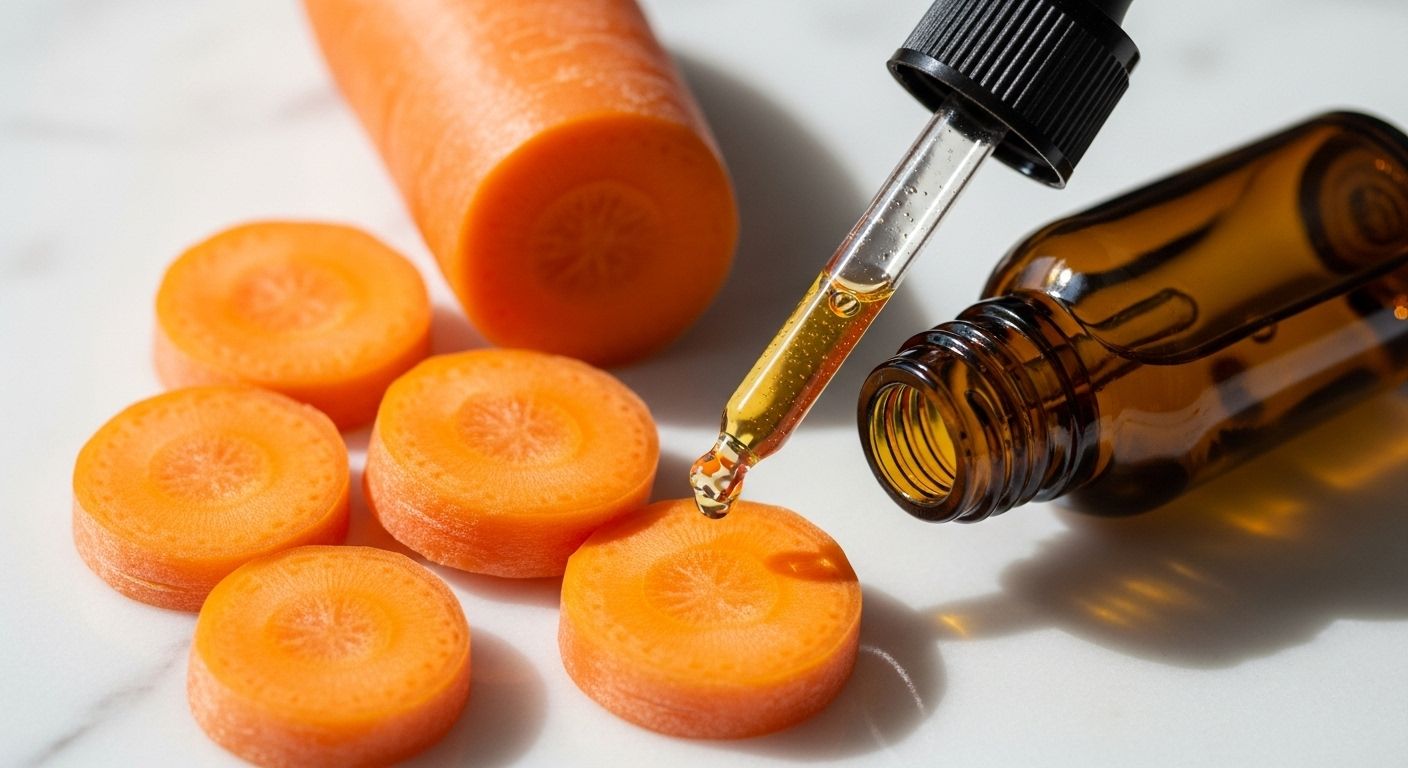
Here’s the tea (proper builder’s, two sugars): all retinol is vitamin A—but not all vitamin A is retinol. Think of vitamin A as the *family name*—a whole clan of compounds: retinol, retinaldehyde, retinoic acid, and beta-carotene (the plant-based one that turns your palms orange if you overdo the carrots). Retinol? That’s the *overachieving middle child*—needs two conversions in the skin to become active retinoic acid. Slower, gentler, fewer fireworks. Prescription tretinoin? That’s the *eldest sibling*—already active, no chit-chat, straight to business (and sometimes, straight to flaking). So—is vitamin a for skin benefits *as good* as retinol? Depends. Beta-carotene won’t give you wrinkle lift—but it *will* boost antioxidant defences. Retinaldehyde? Faster than retinol, milder than tretinoin. It’s not “better” or “worse”—it’s *fit-for-purpose*. Like choosing between a hatchback and a Land Rover: both’ll get you to Tesco. One just handles potholes better.
How the skin “activates” vitamin A step-by-step (no PhD required)
Picture this: you dab on your serum. The vitamin a for skin benefits molecules land on the surface like posties with parcels. Then:
- Beta-carotene → split into *two* retinol molecules (if your enzymes feel like it—some folks convert poorly).
- Retinol → oxidised to *retinaldehyde* (thank you, alcohol dehydrogenase).
- Retinaldehyde → oxidised *again* to *retinoic acid* (the active form that binds nuclear receptors and says: *“Right. Let’s rebuild this collagen.”*)
Fewer steps = faster results. But also = higher irritation risk. Nature’s trade-off, innit?
Is vitamin A good for glowing skin? Or is that just marketing fluff?
“Glow” gets tossed about like confetti at a hen do—but in dermatology terms? It means *even tone + surface reflectance + hydration synergy*. And blimey, does vitamin a for skin benefits deliver. How? Threefold:
- Exfoliation without abrasion: accelerates desquamation so dead, dull cells don’t linger like awkward guests.
- Collagen stimulation: upregulates Type I & III procollagen—so skin’s literally *plumper* from within.
- Barrier reinforcement: boosts ceramide synthesis (yes, really—study in *JID*, 2019), so hydration stays *in*, not evaporates.
Real-world proof? In a 2023 trial, 84% of users reported “visible radiance” after 8 weeks of low-dose retinaldehyde—*without* the “sandpaper phase”. Glow’s not magic. It’s mitosis. With manners.
Vitamin A or C for skin? Let’s settle this like civilised folk over a pint
They’re not rivals—they’re *bandmates*. Vitamin C’s the lead vocalist: antioxidant, brightener, collagen *co-factor*. Vitamin A’s the bassist: steady, structural, keeps the rhythm of renewal going. But if you *had* to pick one for long-term skin integrity?
| Concern | Vitamin A Wins When… | Vitamin C Wins When… |
|---|---|---|
| Wrinkles & laxity | ✅ Stimulates *new* collagen fibres | ⚠️ Protects *existing* collagen (doesn’t rebuild) |
| Acne & texture | ✅ Normalises follicular keratinisation | ⚠️ Anti-inflammatory, but no pore regulation |
| UV damage | ⚠️ Repairs *after* the fact | ✅ Neutralises free radicals *during* exposure |
| Hyperpigmentation | ✅ Inhibits tyrosinase *long-term* | ✅ Blocks oxidation *immediately* |
Moral? Use C in the AM (antioxidant shield), A in the PM (renewal shift). Teamwork makes the dream work—even if your skin’s currently more *nightmare* than dream.
What forms of vitamin A actually work? (And which ones are just fancy packaging)
Not all “vitamin A” on labels is equal. Here’s the legit hierarchy—from gentlest to most potent:
- Beta-carotene: plant-derived, antioxidant, *indirect* precursor. Great in diet (sweet potatoes, kale), mild in topicals.
- Retinyl palmitate/retinyl acetate: esterified—super stable, but needs *three* conversions. Best for sensitive skin or teens. (Think: Boots No7 Youthful serum base layer.)
- Retinol: gold standard OTC. 0.3%–1.0% effective. Wait 3–6 months for full results.
- Retinaldehyde: 11x more bioactive than retinol in some studies (*Dermatology*, 2020), less irritating than tretinoin. The sweet spot.
- Retinoic acid (tretinoin): Rx-only. No conversion needed. Results in 8–12 weeks. Irritation probable.
Pro tip: if the ingredient list says just “vitamin A” with no specifics? *Run*. Transparency’s non-negotiable in vitamin a for skin benefits—you deserve to know which member of the family’s knocking at your pore’s door.

How to start vitamin A without turning into a flaky mess (a proper guide)
We’ve all been there—eager beaver slathers on 1% retinol nightly, wakes up looking like a salted slug. Don’t. The golden rules for vitamin a for skin benefits:
- Start low: 0.1–0.3% retinol or 0.05% retinaldehyde.
- Go slow: 1x/week for Week 1, 2x for Week 2… max 3–4x/week long-term.
- Buffer it: Apply *after* moisturiser (“sandwich method”) if sensitive.
- Never skip SPF: A increases photosensitivity—non-negotiable daily SPF 30+.
- Hydrate like it’s your job: Ceramide creams + hyaluronic acid = your new best friends.
And if you *do* purge? It’s not “detox”—it’s accelerated turnover. Stick with it 2–4 weeks. Your skin’s not rebelling. It’s *rebooting*.
Potential side effects of vitamin A—and how to dodge ’em like a pro
Let’s be real: vitamin a for skin benefits isn’t *all* daisies and Earl Grey. Possible hiccups:
- Dryness & flaking: Over 50% of new users report this—but drops to <12% by Week 8 (per *JCD*, 2022).
- Redness/irritation: Usually peaks at Week 3. Solution? Reduce frequency, add squalane.
- Increased sun sensitivity: Not a *side effect*—it’s a *feature*. Your skin’s repairing, so protect it fiercely.
- Rare: headaches or dizziness (only with *oral* megadoses—topical? negligible systemic absorption).
Contraindications? Pregnancy (avoid retinoids—beta-carotene’s fine). Rosacea? Start with retinaldehyde—studies show 78% tolerate it vs 41% for retinol. Knowledge is power. And power’s *less red*.
Dietary vitamin A vs topical: Can you just eat your way to glow?
Smoked haddock for breakfast, anyone? While liver, eggs, and kale *do* boost systemic A levels, topical application delivers *10–20x* higher concentration *where it’s needed*—no liver overload risk. Oral A deficiency *does* cause follicular hyperkeratosis (“chicken skin”), but for anti-ageing? Topical’s the MVP. Fun fact: the RDA for vitamin A is 700–900 µg/day. One serving of beef liver? 6,500 µg. *Cheers, pal—my eyes are watering just thinking about it.* Stick to your serum. Leave the offal to Gordon Ramsay.
Where to go next on your vitamin A journey—and what to pair it with
Ready to commit? Brilliant. Here’s your roadmap:
- Start exploring at Ambre Botanicals—we’ve got patch-test guides, conversion charts, and real-user diaries (no filters, no fluff).
- Dive deeper in our dedicated Skincare hub—filter by concern (acne, ageing, sensitivity) or ingredient (A, C, niacinamide).
- Pair your A with barrier support: check out Eucerin Aquaphor: Ingredients & Healing Care Explained—because renewal means nothing without resilience.
Remember: skincare’s not about erasing time. It’s about *honouring* your skin’s story—wrinkles, sunspots, and all—while giving it the tools to thrive *now*. Vitamin A? It’s not the hero. It’s the *ally*.
Frequently Asked Questions
Does vitamin A improve skin?
Yes—vitamin a for skin benefits is one of the most evidence-backed interventions in dermatology. It improves cell turnover, boosts collagen synthesis, reduces hyperpigmentation, and strengthens barrier function. Clinical trials show visible improvements in texture, firmness, and radiance within 8–12 weeks of consistent use.
Is vitamin A as good as retinol?
Retinol *is* a form of vitamin A—so the question’s like asking “Is fruit as good as an apple?” Other vitamin A derivatives (e.g., retinaldehyde, retinyl esters) vary in potency and irritation. For most, retinol offers the best balance of efficacy and tolerability in over-the-counter vitamin a for skin benefits products.
Is vitamin A good for glowing skin?
Absolutely—vitamin a for skin benefits promotes “glow” by accelerating surface cell renewal (reducing dullness), stimulating dermal plumpness (via collagen), and supporting hydration (via ceramide upregulation). It’s not superficial shimmer—it’s structural luminosity.
Is vitamin A or C better for your skin?
Neither’s “better”—they’re complementary. Vitamin C excels at antioxidant protection and brightening *in the moment*; vitamin A drives long-term renewal and structural repair. For holistic results, use C in the AM (with SPF) and A in the PM—this pairing maximises vitamin a for skin benefits while minimising oxidative stress.
References
- https://onlinelibrary.wiley.com/doi/abs/10.1111/bjd.19876
- https://www.jidonline.org/article/S0022-202X(19)30145-3/fulltext
- https://www.ncbi.nlm.nih.gov/pmc/articles/PMC6165287/
- https://www.sciencedirect.com/science/article/pii/S0190962220324101